Before any RV transport job leaves the driveway, two things get checked on every axle — tire condition and pressure, and lug nut torque. It takes maybe ten minutes. It’s also the difference between an uneventful delivery and a blown tire on the interstate.
We ask every customer to inspect their unit before we arrive. But we don’t assume it’s been done. Here’s why — and what we actually look for.
The Tire Problem Nobody Talks About
RV tires fail more often than truck or passenger car tires, and the most common cause isn’t road hazard — it’s underinflation. ST-rated trailer tires carry heavy loads at high pressures (typically 65–80 PSI cold), and they sit still between trips. Tires lose pressure just sitting. A tire that looked fine at storage may be running 15–20 PSI low by the time haul day comes.
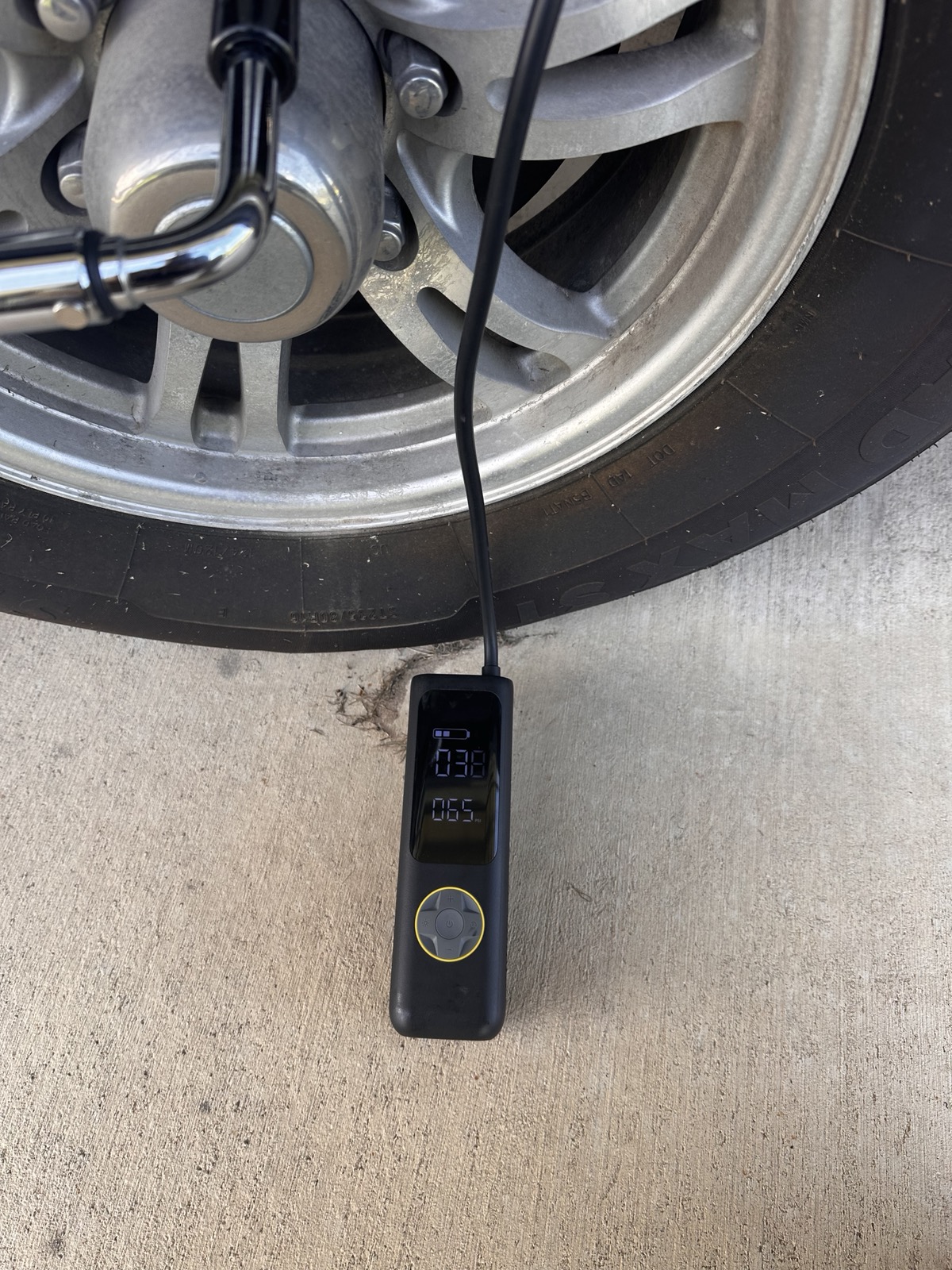
That’s a real pre-trip reading: 38 PSI on a tire that should be at 65. It looked fine from the outside. Run it at highway speed under a loaded trailer and it won’t look fine for long — heat builds in an underinflated sidewall fast, and the failure when it comes is sudden.
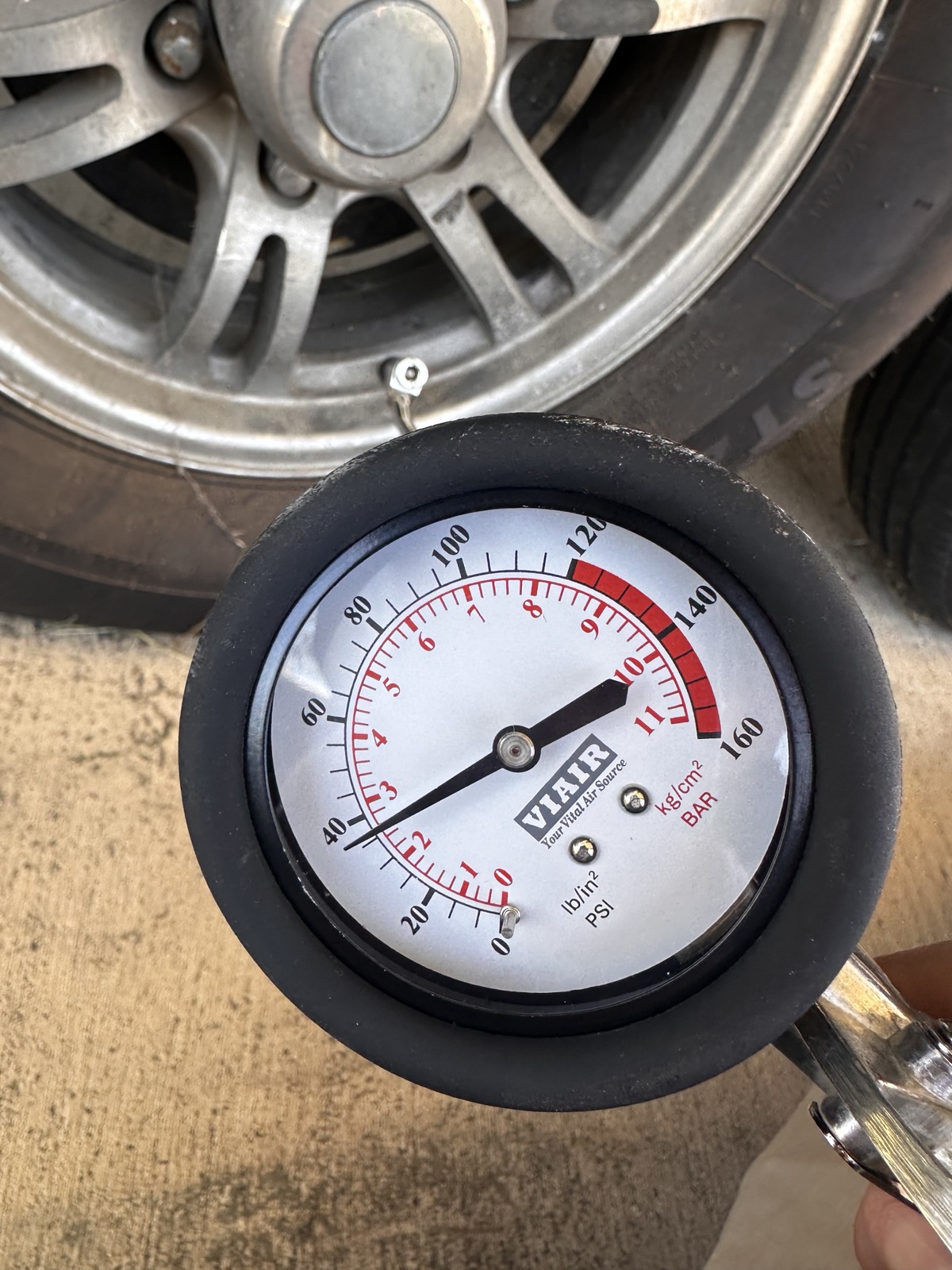
We check pressure cold, before the tow vehicle is hooked up, using a calibrated gauge on every tire including the spare if one is present. If pressure is low, we bring it up. If a tire shows sidewall cracking, bubbling, or uneven wear that suggests it won’t make the trip, the customer hears about it before we roll.
Road Hazards Happen Too
Not every tire problem is slow-burn. Screws, nails, and road debris are a real risk on any haul. We carry a plug kit and a compressor on every job. If a repairable puncture is found at pre-trip or during the 50-mile check, we handle it on the spot — no service call, no delay.
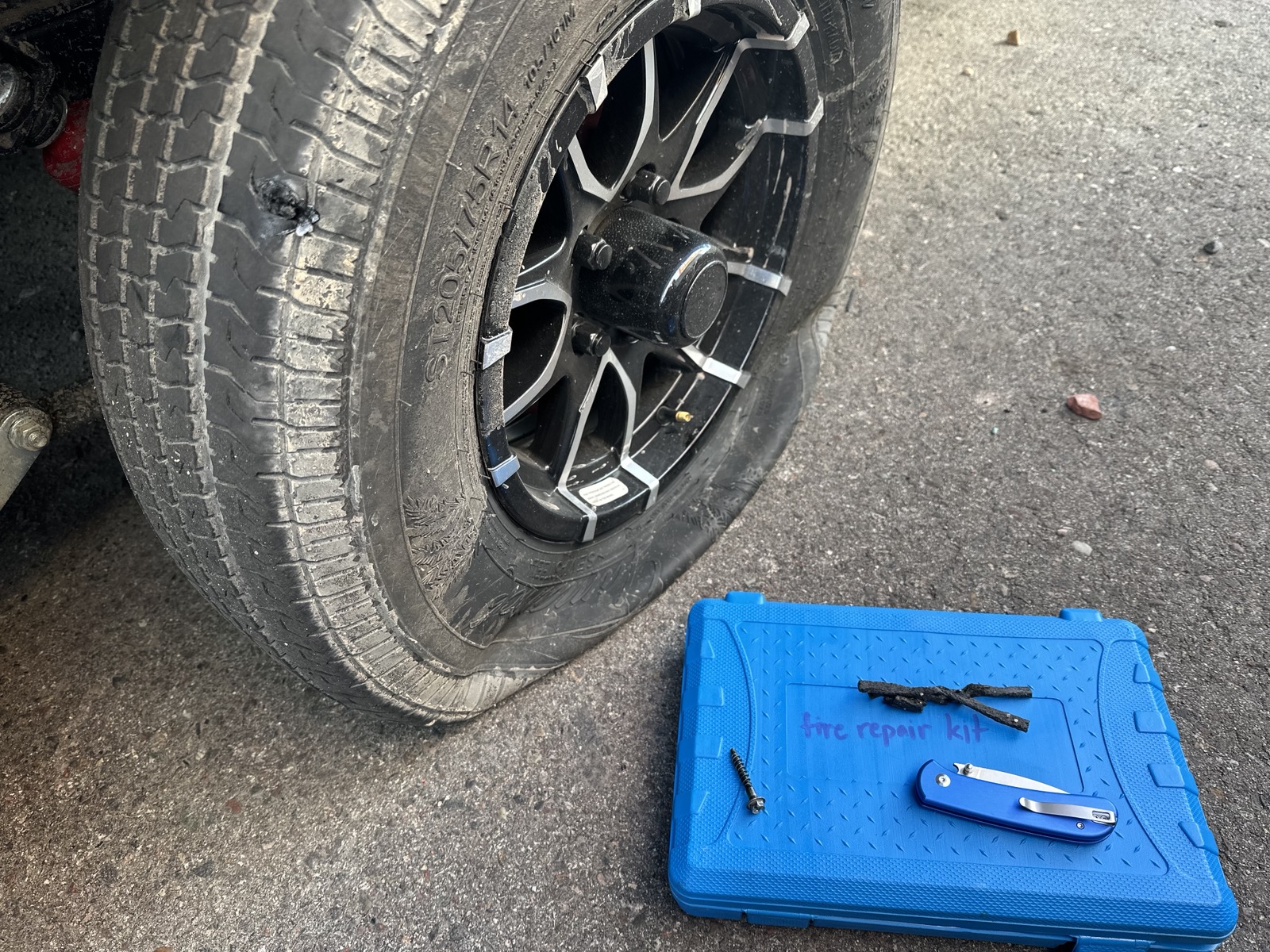
What we won’t do is roll on a tire that isn’t safe. Sidewall damage, structural compromise, or a tire that’s already heat-cycled past its limit gets flagged and the customer decides how to proceed before we move the unit.
Lug Nuts Are Not a Set-It-and-Forget-It Item
Trailer lug nuts loosen. It happens on new trailers and old ones. Vibration, thermal cycling, and improperly torqued nuts from the factory or last tire swap are all common culprits. A loose lug nut found on the ground after delivery means the wheel was moving on the hub the whole trip. A missing one means you got lucky.
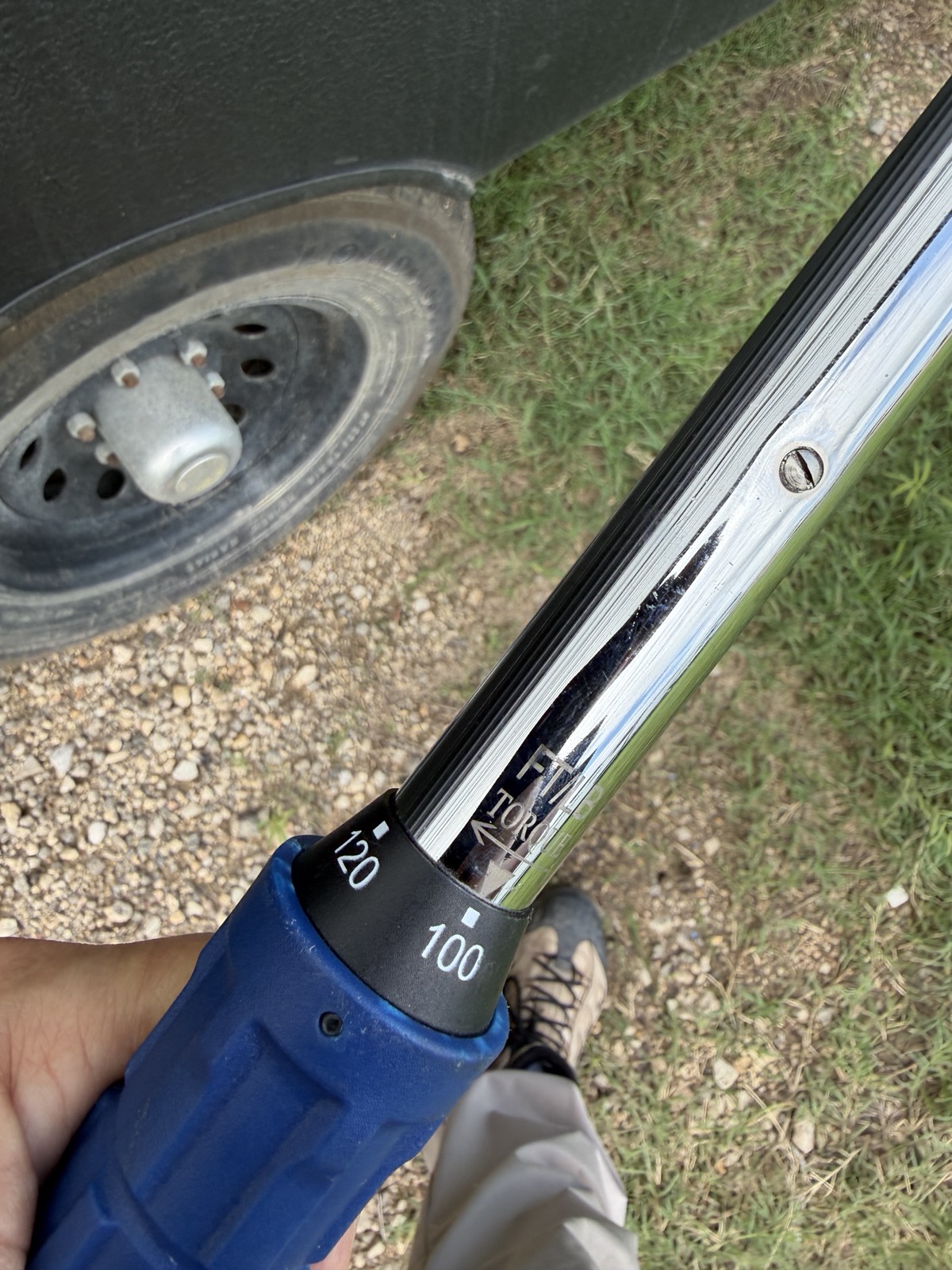
We torque-check every lug nut with a calibrated torque wrench before departure. On most trailer axles that’s in the 90–110 ft-lb range depending on stud size; we verify against axle spec.
The 50-Mile Load Check
Even with everything verified at origin, we stop at approximately 50 miles into every haul to recheck. Tires settle under load. Lug nuts can shift slightly on a new setup. The hitch connection gets inspected. We look at how the trailer is tracking and whether anything has shifted.
If something isn’t right, we find it 50 miles out — not 400.
What This Means for You
When you book transport with Mission Ready RV Services, you’re not handing your RV to a driver who throws on the hitch ball and heads down the highway. We are an RVTAA Registered RV Technician. We own and tow a 45’ fifth wheel ourselves. We know what a properly prepared trailer looks and drives like — and we know when something isn’t right.
Transport day shouldn’t be stressful. A little diligence before departure makes sure it isn’t.
Mission Ready RV Transport
Professional tow-away service from an RVTAA Registered RV Technician. Serving Texas and the lower 48.
Questions about how we handle your unit? Call or text: (512) 593-1673
Get a Transport Quote